The visitor attractions sector is undergoing a fascinating period of evolution. At the recent BALPPA Marketing Seminar, hosted at Paultons Park, industry professionals gathered to look beyond immediate operational hurdles and explore the overarching trends steering investor strategies, marketing narratives, and guest expectations.
From mythology-based themes to cutting-edge drone applications, here is a comprehensive breakdown of the top trends redefining the sector, tailored for operators looking to hone their strategy.
1. The Norse Invasion
Mythology and history are merging into one of the most versatile trends in attraction theming today: all things Vikings. Norse themes successfully bridge the gap between historical education and high-fantasy action, providing a cross-generational appeal that resonates with both young children and thrill-seekers.
Investment across Europe highlights the sheer scale of this narrative shift:
- Recent Anchors: Paultons Park opened its highly anticipated Valgard: Realm of the Vikings area, serving as a brilliant template for regional execution. This follows successful rollouts like Drayton Manor’s Vikings (2022) and the extensive Valhalla relaunch at Blackpool Pleasure Beach (2023).
- The European Flurry: The momentum continues into 2026 and 2027 with Dønnervind at Freizeitpark Plohn, Valkyrie at Parc Festyland, and Midgårdsormen slated for Djurs Sommerland.
- Global Validation: On a broader scale, Universal’s Epic Universe dedicated an entire world to this category with the Isle of Berk.
The Marketing Angle: Vikings offer an incredibly elastic theme. It allows operators to dial up the family-friendly storytelling or elevate the intense, gritty action depending on the specific target demographic of the ride.
2. IP 2.0: Gaming & Fandoms
Traditional movie studio tie-ins are no longer the exclusive drivers of high performance. Instead, lifestyle, gaming brands, and highly active subcultures are dictating where consumers spend their time and money.
We are moving away from passive linear stories towards active fandoms:
- Gaming Giants: Properties like Super Nintendo World and the upcoming Minecraft World at Chessington World of Adventures shift the guest from an observer to a player.
- The Power of Fandoms: Universal’s Fan Fest Nights format targets hyper-engaged communities spanning properties like Dungeons & Dragons, One Piece, and Star Trek.
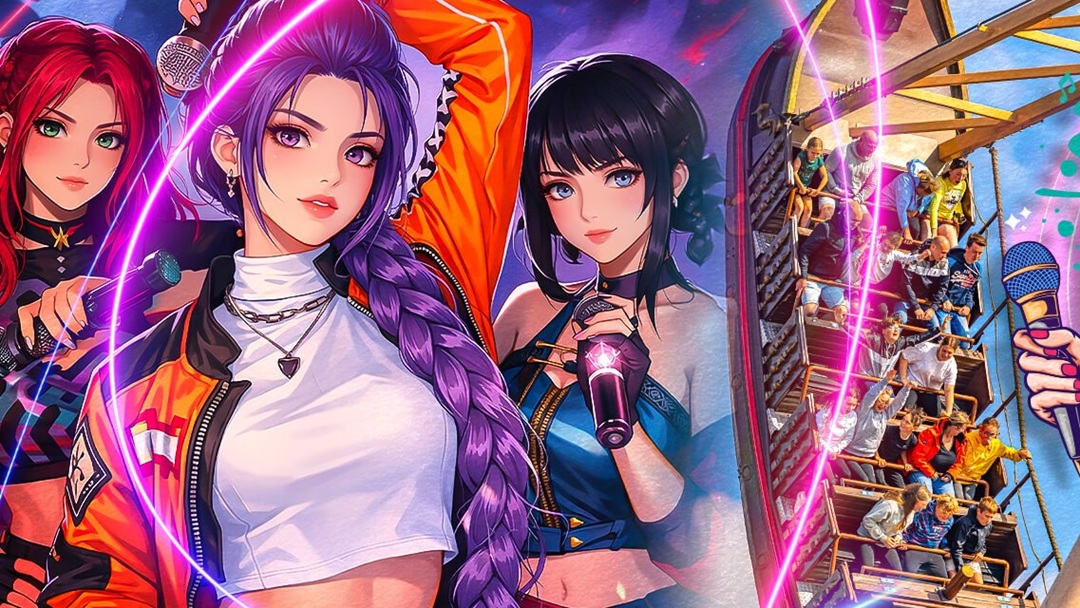
- Pop Culture Pop-ups: Phenomenons like K-Pop Demon Hunters have sparked targeted events across regional UK parks, including Drayton Manor, Twinlakes, Crealy, Wheelgate, and The Big Sheep, capturing pre-sold loyalty outside typical cinematic loops. Even heritage organisations like the National Trust have leaned into active engagement, partnering with Pokémon for garden-based family challenges.
The Marketing Angle: These demographics are not just visitors; they are "players" or "stans". They bring unparalleled organic social reach and deep brand loyalty, making them highly lucrative targets for community-led marketing campaigns.
3. The Rise of the Spectacle Family Flat Ride
There is a noticeable surge in demand for highly visual flat rides that cater to a dual audience: the people on the ride, and the crowd watching from the path.
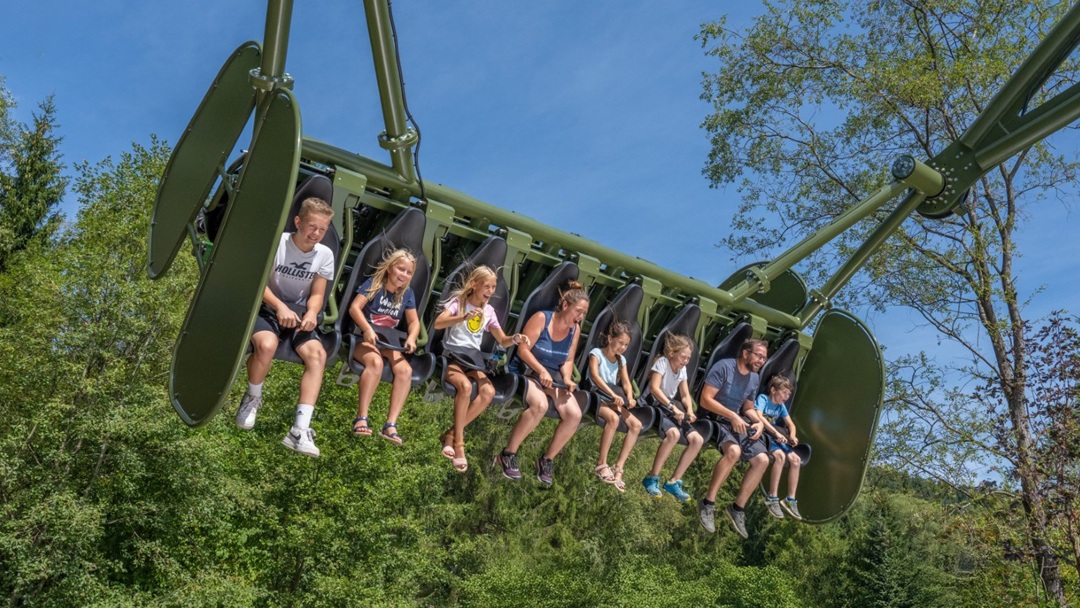
Historically, flat rides were fillers between major coasters. Today, models like Zamperla’s NebulaZ or ART Engineering’s Wild Swing have turned the mechanical motion itself into an artistic piece of entertainment. Six Wild Swing models are opening across Europe this year alone, including the Vild Swing at Paultons Park, Stormvåg at Liseberg, and developments at Emerald Park and Bellewaerde.
The Marketing Angle: Think of this as "Instagrammable kinetic energy". These attractions essentially market themselves because they provide vibrant, eye-catching background content for TikToks, Reels, and family photos.
4. Frictionless Experiences: Digital Solutions
With everyday lives becoming increasingly hectic, consumers view seamless efficiency as a baseline expectation rather than an upscale luxury. Removing points of friction from the visitor journey, whether it is ticket booking, food ordering, or photo collection, directly influences guest satisfaction scores.
Innovative tech is scaling down to regional operators rapidly:
- Streamlined F&B: Outlets at parks like Crealy are rolling out modern digital touch-screen ordering kiosks to curb long, static lunch queues.
- Advanced Recognition: Companies like EPT have developed facial recognition photography tools. At spaces like Drayton Manor, guests can take a quick selfie in their hotel room, and the app automatically pulls every ride photo they appeared in throughout the day.
- Biometric Access: Universal continues to pioneer biometric admissions and ubiquitous tap-and-pay wristbands, making transactions completely seamless.
The Marketing Angle: Streamlining operations drives a clear commercial upside. If a guest is not locked in a physical queue for food or tickets, they have more time to browse retail shops or relax in premium themed dining venues.
5. Main Character Energy: Personalised Storytelling
Modern storytelling has pivoted from passive absorption to active participation, often referred to as "story-living". Guests want to feel like their presence matters and that their actions directly influence the environment.
- Customisable Narrative: The Galacticoaster experiences at LEGOLAND California and Florida combine cutting-edge design with customisable space adventures chosen by the family.
- Active Influencing: At Chessington's World of PAW Patrol, particularly with Chase’s Mountain Mission, a clever pre-show frames the ride so that young children feel they are key players in the story, rather than just sitting on a moving vehicle.
- Tactile Autonomy: At a foundational level, children react joyfully to physical controls, whether it is steering, pedalling, or firing a laser on an interactive dark ride like Paultons Park's Ghostly Manor.
The Marketing Angle: Position your marketing copy around the concept of agency. Frame the experience around how the guest becomes the hero of the day, creating deeply individualised memories that prompt word-of-mouth recommendations.
6. The Next-Gen Attractions: New Entrants
The UK attractions landscape is bracing for a monumental shift with the arrival of global industry heavyweights on British soil, notably Universal Studios Great Britain in Bedford (targeting around 2031) and the expansion plans of Puy du Fou UK (targeting a show park around 2029).
These projects are a massive vote of confidence in the economic viability of the UK tourism sector, and the ripple effects will be substantial. Beyond major theme parks, distinct urban concepts are thriving, such as the £120 million multi-sensory London Tunnels project under High Holborn (estimated 2028), the new London Museum (2026), and the newly opened V&A East. Homegrown concepts like The Storied Lands at Kynren are also expanding the theatrical show park market.
The Marketing Angle: The entry benchmark is rising across the board. Regional and independent attractions must double down on their unique local identities, agility, and community roots to carve out a distinct space alongside these global-standard operations.

7. Immersive & Themed Dining
Eating and drinking on a day out has officially transitioned from an operational necessity into a core component of the entertainment.
Universal's Epic Universe set a high standard here, using venues like the Burning Blade Tavern or Parisian wizarding cafés to keep guests fully anchored in the fantasy world during dinner. Locally, Paultons Park has mirrored this strategy with The Feasting Hall in Valgard, blending themed menus with rich visual architecture.
Even in major cities, immersive dining is booming, evidenced by popular period-specific concepts like London's 1930s jazz age experience, 58th Street, where even the dress code helps maintains the illusion.
The Marketing Angle: This presents an exceptional high-margin opportunity. When food and beverage options are presented as an "in-world" experience rather than just a quick bite, guests are far more willing to accept a premium price point.
8. Sustainability: The Electric Shift
Environmental responsibility has moved far past standard corporate social responsibility (CSR) compliance items. It is fundamentally changing how major and regional attractions generate their underlying power.
- Fleet Electrification: Classic attractions are moving away from fossil fuels, with Disneyland's Autopia phasing out petrol engines, Efteling converting its iconic steam trains to electric power, and the Universal Studios Tour replacing its diesel-hydraulic engines.
- Infrastructure Investment: On a regional level, Paultons Park has invested £1.5 million into a substantial solar energy grid, displaying a deep infrastructure commitment rather than a surface-level marketing nod.
The Marketing Angle: Environmental metrics are no longer just for internal reviews. Green credentials serve as an important pillar of your brand story, particularly when marketing to eco-conscious parents looking for guilt-free family experiences.
9. The AI Teething Phase
While artificial intelligence remains a massive talking point across marketing seminars, the industry is entering a more mature, discerning implementation phase.
Early creative experiments, such as relying entirely on generative AI for marketing artwork or using it as a central gimmick for live entertainment (such as Alton Towers' recent fireworks), have often felt hollow or faced consumer pushback. However, where AI truly shines is in backend efficiency and guest utility.
The Marketing Angle: Focus on "Efficiency, not Artistry". Direct your resources towards AI-powered digital assistants and predictive chatbots that clear operational hurdles, helping guests seamlessly navigate your website, book tickets, or plan their day itinerary.
10. Reassuring & Retro Nostalgia
In periods of macroeconomic volatility or global uncertainty, consumers consistently seek solace in the familiar. Looking back provides comfort, making nostalgia a powerful emotional hook across the visitor economy.
This trend is incredibly potent for heritage operators like English Heritage or the National Trust, where connecting with physical history or discovering vintage household items sparks deep personal reflection. Theme parks can tap into this just as effectively by executing retro merchandise lines, hosting throwback 80s or 90s themed evenings, or reintroducing retired park mascots.
The Marketing Angle: Nostalgia functions as an excellent low-cost, high-emotion marketing lever. It prompts parents to share their own childhood memories with their kids, unlocking immediate multi-generational ticket sales.
11. Skyward Evolution: Drones Take Flight
Drones are rapidly moving from novelty technology to an essential operational and entertainment framework for modern theme parks. Operators are utilising them simultaneously across two vastly different areas: high-impact entertainment and backend engineering.
- The Spectacle Multiplier: For night-time entertainment, drone swarms are progressively replacing or enhancing traditional fireworks. Major operations like Disney and United Parks have successfully deployed massive nightly drone spectaculars, which significantly extend guest in-park dwell time and boost late-night food, drink, and retail sales.
- The Engineering Edge: Behind the scenes, the application is changing how safety and maintenance are handled. High-profile industry collaborations such as roller coaster manufacturer Vekoma partnering with specialised drone inspection firms, mean automated aerial drones are now used to map tracks in 3D and scan structural elements for micro-fractures, drastically lowering inspection risks and downtime.
The Marketing Angle: Drones offer a dual-sided marketing narrative. Outwardly, they provide a highly shareable, modern visual centrepiece for evening events. Inwardly, leaning into advanced drone safety partnerships builds a powerful story around operational excellence and world-class safety standards.