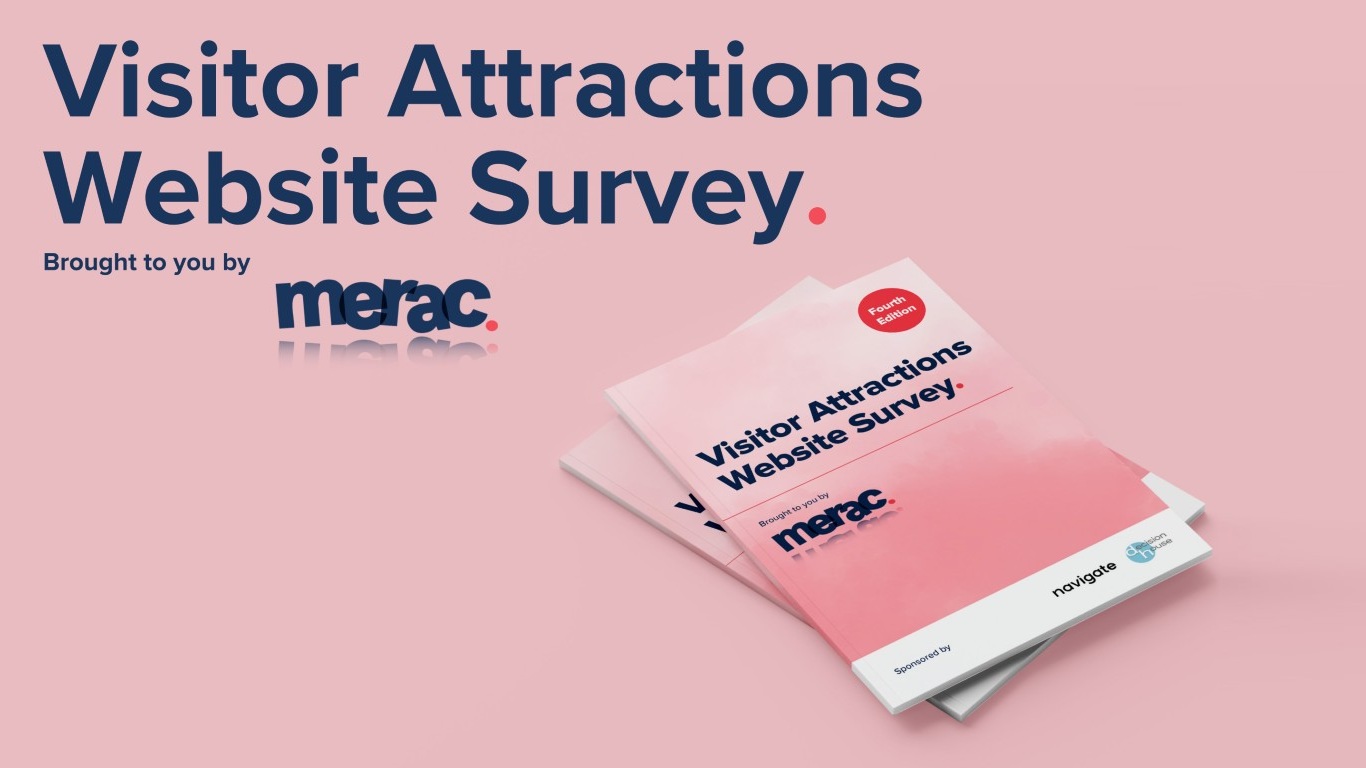
The latest edition of the Visitor Attractions Website Survey has been released, revealing how theme parks, museums, heritage sites and other cultural attractions are performing online and where digital friction is undermining revenue, trust and guest experience.
Now in its fourth edition, the sector-specific study is produced by ticketing and guest commerce specialist Merac, with strategic input from brand marketing agency Navigate and market research consultancy Decision House. The report remains the only digital performance benchmark built exclusively for the attractions industry, providing operators with actionable guidance rather than generic e-commerce metrics.
Visitor expectations rise as performance falls short
This year’s findings underline a growing disconnect between visitor expectations and current website performance. While 63.5% of visitors identify ease of use as the most important factor when booking online, 73% of surveyed attraction websites were rated below “poor” for performance. Alarmingly, 15 sites took more than 25 seconds to become usable on mobile devices, far exceeding accepted best practice benchmarks.
The survey highlights that digital experience is no longer a supporting channel but a defining part of the visitor journey, directly shaping brand perception, purchase confidence and long-term loyalty. External research cited within the report indicates that 40% of users will abandon a website if it takes longer than three seconds to load, reinforcing the commercial risk of underperforming platforms.
Consumer insight added for the first time
A major development in this edition is the inclusion of consumer research, conducted in partnership with Decision House. This research brings the voice of the visitor directly into the analysis, exploring where users encounter confusion, how trust signals and page layout influence purchasing decisions, and the real-world consequences of slow load times and complex checkout journeys.
By combining benchmarking data with behavioural insight, the report provides operators with context behind performance metrics and clearer direction on where improvements will have the greatest impact.
Focus on AI search and digital sustainability
The 2026 edition also expands its scope to address emerging priorities, including optimisation for AI-driven search and digital sustainability. Practical guidance is included on Answer Engine Optimisation, reducing website energy consumption, improving load speed, and estimating carbon emissions linked to digital infrastructure.
The report encourages attractions to view sustainability improvements not only as an environmental responsibility but as a performance opportunity, aligning faster, leaner websites with both guest expectations and organisational values.
Deeper data and stronger regional focus
With more than 60% higher participation than the previous edition, this year’s survey delivers the most comprehensive dataset to date. Built entirely around the UK and Ireland, including 16% of responses from the Republic of Ireland, it offers operators regionally relevant insights into digital maturity, performance gaps and competitive positioning.
According to Merac CEO Andy Povey, the findings provide clear direction for attractions seeking to convert more guests online, reduce friction and design digital experiences that meet modern expectations while remaining commercially effective.
The full Visitor Attraction Website Survey is now available to download, offering operators, marketers and suppliers a practical roadmap to strengthen digital performance across the attractions sector.